In 1999, Stephen King began writing about his craft—and his life. A widely reported accident jeopardized both, as described in this extract on his website.
A note & a disclaimer: Article may contain some spoilers. If this book is the sun, I am the mirror. The following words are my take on Stephen King’s writing.
I first read “On Writing” by Stephen King in 2016, when I started working. I didn’t really read it. I rushed through it and said ‘this shall be one of my favorite books’. And so it was…
Turns out, it became one of my favorite books not even for the tips on writing, but the lessons on life.
In a strange sequence of events (nine years and a lot of professional trauma later), I finally sat down to really read it for the third time.
Slowly.
Word by word.
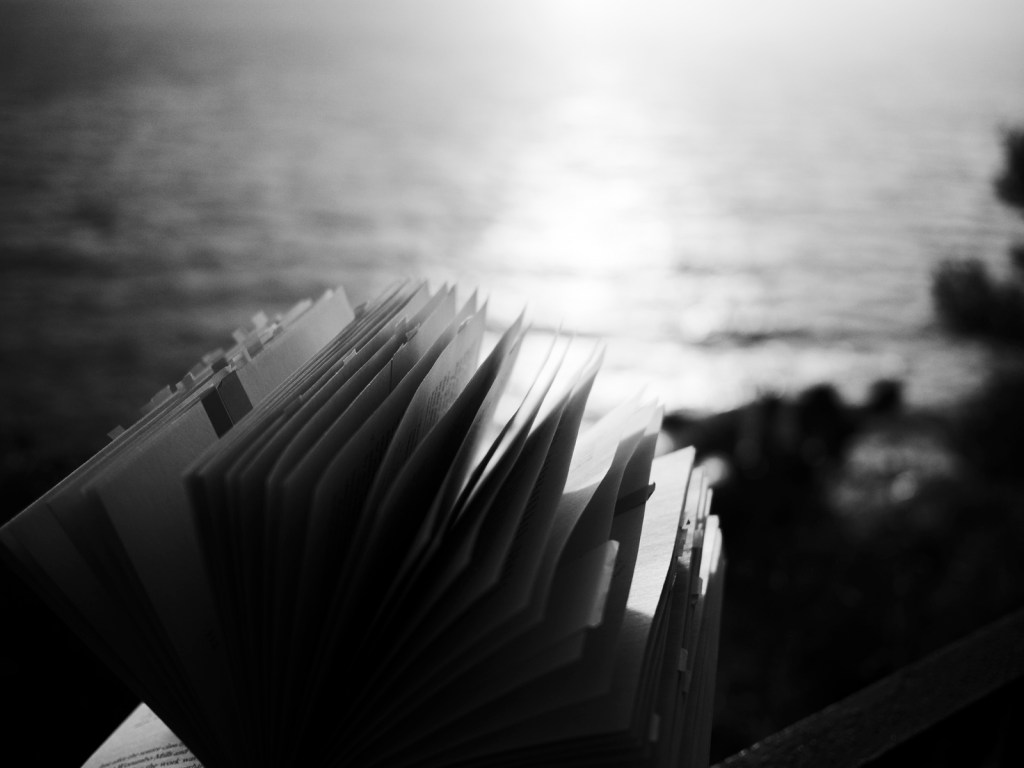
There’s a beauty in this kind of reading. But I had a greater gift I discovered. The gift was left by the 2020 version of me. In a second reading, I left sticky notes throughout the book to come back to later.
Flipping through the book recently, I had no idea what they marked, but I was about to find out.
This article is about my findings, thoughts, and important lessons from the book “On Writing” by Stephen King. I’m writing it for those that, like me, in 2020 (or earlier or later), rushed through the book without pausing to think about the depth of what one of the greatest writers of our times had to say about life (and writing).
This article is a blend of the 2020 version me and me today. A collaboration, if you will, about the notes that I kept.

12 bookmarks from the book “On Writing” by Stephen King
1. Page 25: Bookmarked in 2020
“I was born in 1947 and we didn’t get our first television until 1958.”
Stephen King goes on to talk about his early memories. He lists the first movies he’s seen. I believe that back in 2020, I too wanted to watch the movies to see which worlds he immersed himself in.
Today, I thank myself for saving this page because I likely would have skipped it. Not because I’m not interested (I would still note them down, physically), but because I have grown to be an artist with my own influences.
The path of an artist starts with childhood memories. The way Stephen King goes on to elaborate on his, is the way I’d do it if I were to start writing something ‘whole’. Stored in the depth of our subconscious, those memories make us who we are – but it is worth noting that those exact memories are what sculpt the artist.
A note to all writers: start at the beginning. Gather your foundations. Build on the pillars. And please, don’t read between my lines either.

2. Page 26: Bookmarked in 2020
“…if you’re still starting out as a writer, you could do worse than strip your television’s electric plug-wire, wrap a spike around it, and then stick it back into the wall. See what blows, and how far. Just an idea.”
Here, Stephen King references a funny story from his childhood. I bookmarked it back then because it is the first lesson he gives on actually being an author.
Today, I would second that thought – get rid of your television (and beware of online blockers). In today’s overwhelming world of information, you have to learn to filter your sources. With the years, you have to learn to identify trash, and most literally throw it out the window.
I don’t own a TV. I think some people my age can relate. And let me tell you – it did make me into a better writer. My home is filled with all sorts of books, and IF boredom ever strikes – well. Cicero said it best, “If you have a garden and a library, you have everything you need.”
Bothered by YouTube ads? Yeah, I mute those too.
3. Page 25: Bookmarked in 2020
Stephen King writes that he submitted his piece to F&SF, and they actually bought it.
“One thing I’ve noticed is that when you’ve had a little success, magazines are a lot less apt to use that phrase, ‘Not for us.’”
Well, we really are getting to the good stuff. Today I can say that 7 rejections later (and Stephen King would chuckle here), I’m a better writer. For me.
Instead of getting desperate or upset that my writing kept getting rejected, I kept persevering. I realized, for example, that I did not want to be featured in magazines or books anymore. I wanted feedback from editors – real, authentic, raw, and honest advice from people that one day may be interested in publishing my work.
But Stephen King is right, as with many professions, once you make a name for yourself – watch the publishers (or insert professionals relevant to your field) reach out to you themselves.
Who’s there for you as you’re starting out though? Well, it’s gotta be you and you. Keep writing!
4. Page 56: Bookmarked in 2020
Here, the author talks about his experience with his first editor, the first ‘good’ editor that actually taught him all the right things with strategic advice.
Advice from John Gould: “When you write the story, you’re telling yourself the story,” he said. “When you write, your main job is taking out all the things that are not the story.”
I believe this was an original bookmark that told me – save this advice for later. I didn’t think much of it until recently. There’s more depth to this phrase beyond the evident.
Advice on writing: When we write, we must always have someone in mind, don’t we? Who is our audience? Even if you’re writing for a general one, you must have someone in mind. If you don’t, you’re writing for yourself. Your story is a reflection of you, through your lens.
Advice on editing: When you edit your work, my trick is to read it as an objective observer. Someone that does not know who wrote the piece, and can take a look at it with a critical eye. I may not be able to give myself constructive feedback, but my editing will take the piece to a good enough place to send it to my editor (note of thanks to my actual editor here).
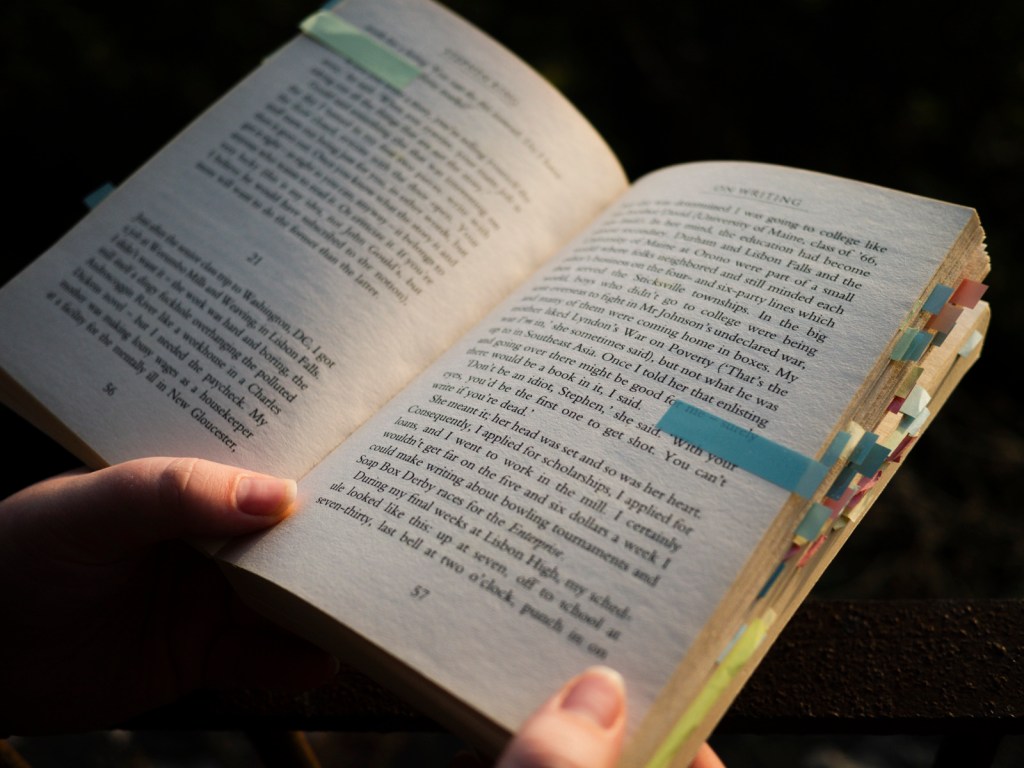
5. Page 57: Bookmarked in 2024
Here, Stephen King’s mother, Nellie Ruth, talks him out of going to war (he also thought there may be a book in it).
“Don’t be an idiot, Stephen,” she said. “With your eyes, you’d be the first one to get shot. You can’t write if you’re dead.”
She really meant it too, as the author says, “her head was set and so was her heart”. I bookmarked this to remember all the wise sayings of my own mother, many of which have come back to me as memories only when I was much older.
I think as young adults, we have quite a skewed perception of the world, and life. Without getting too philosophical, I’ll just say this – ‘mother knows best’.
Stephen King’s destiny would not have taken him through all the heights, triumphs, and trials without listening to his mother then and there. I respect that. I bookmarked it to one day share my mother’s wisdom with my daughter. If I’m fortunate enough, some of my own too!
6. Page 62: Bookmarked in 2020
“I don’t want to speak too disparagingly of my generation (actually, I do, we had a chance to change the world and opted for the Home Shopping Network instead).”
Stephen King goes on to talk about how some student writers believed that good writing comes spontaneously, and unanimously they believed that serious art comes from…out there!
There’s one more quote I want to highlight, and it is this: “Writers were blessed stenographers taking divine dictation”. (Note: quote taken out of context)
This quote, I found quite amusing back then. Firstly, for the bold statement about the author’s generation. But I’ll leave it with you to deliberate. The second part is about the belief of where ‘good writing’ comes from.
I used to think it is a skill you must hone, and learn, and read, and practice. Although in part true, I also learned with time that we must learn to listen in order to be good writers. That’s the best advice I can give you – the secret to how I learned to write.
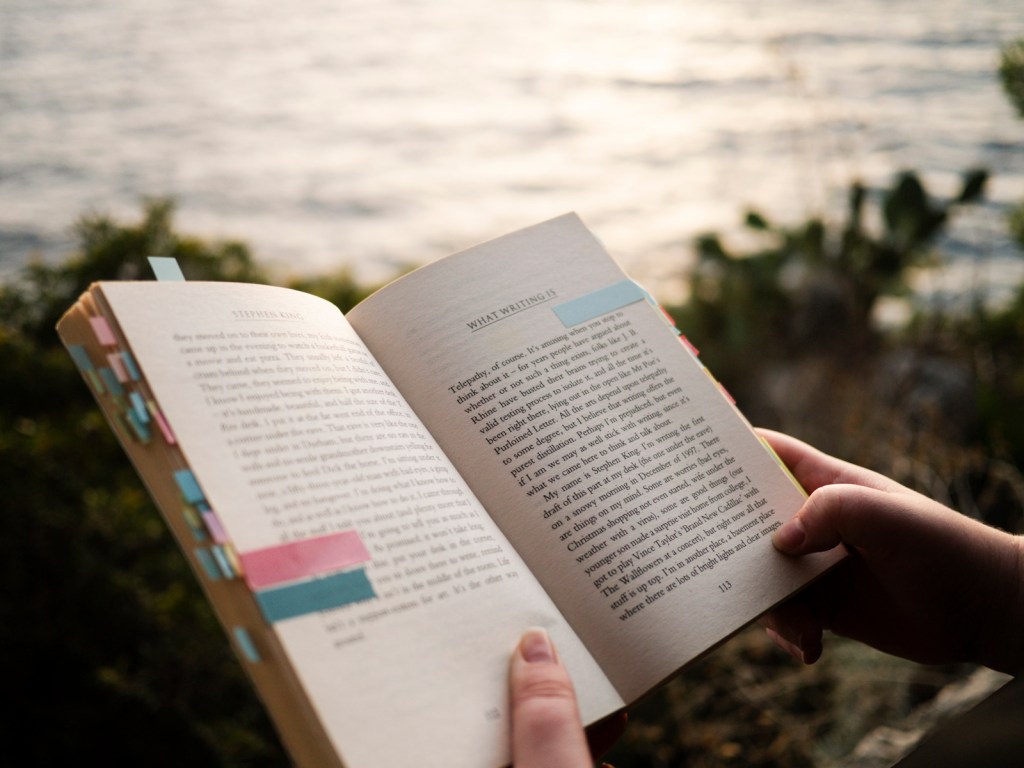
Page 113: INTERMISSION
While photographing the book for this article, my eyes landed on a page with the quote “All the arts depend upon telepathy to some degree, but I believe that writing offers the purest distillation.”
I did bookmark the page back in 2020, but not for this particular quote. Today, I wish Stephen King’s thought would continue past this sentence! A spark of brilliance, an idea, some unspoken wisdom – born in a spontaneous trail of thought. One day, I hope this too will be a thought that starts a new book.
That’s where the magic of writing lies. The way to get there is writing from the heart, the way the author does in his book “On Writing”.
If there’s another writing lesson I learned on my own, it is this: it can only be done with a path with heart. Masterminding what you have to say/write can lead to dead ends. Unless, of course, it is your heart’s desire and you’ve mastered the craft to have the ability to do both – mind & heart aligned.
But that, I must say, is a dangerous game to play (depending on how you use it, of course!).
7. Page 76: Bookmarked in 2024
“…for the first time in my life, writing was hard.” Stephen King goes on to talk about how balancing his job (teaching), family, and writing on the side was really difficult.
I wanted to keep a memory of this – the fact that we’re all human. There’s only so much we can do. Even one of the greatest writers struggled with the same things you do, the same things I do, too.
My personal struggles are perhaps better summarized in my article on the myth of hyper-productivity and time. I don’t have all the answers, nor do I even know where I really want to take this blog. But the trick, like for Stephen King, is to keep at it with your passion.
But we do need to acknowledge that writing is hard. My uphill battle of writing a novel certainly taught me a lot – and if you’re curious, it was that I wasn’t ready. So here I am typing away at this article and having the time of my life.
That’s the trick, isn’t it?

8. Page 82: Bookmarked in 2020 and 2024 (today)
2024 bookmark
“…stopping a piece of work just because it’s hard, either emotionally or imaginatively, is a bad idea.”
You don’t have to go far to find examples. I ran into this issue yesterday as I was writing this piece. Mentally, I’m exhausted. I wanted so badly to put this piece out yesterday, because it felt like the right time.
Wise sayings helped me, but if we step back, can’t it also be today? As hard as it can be (emotionally) to write this piece, I still show up writing it. It’s never the perfect time to put something out into the world – but as long as you do it, you might be helping someone.
Stephen King published his paperback edition of the book I’m holding in 2012, originally published in 2000. This work was available to me throughout my childhood and early adulthood. And so the saying goes…”There is a time and place for everything.” I’m glad I found this book when I did. I am even more glad I re-read it recently.
Authors leave the good part till the end (not in this book by the way!). I have a lot to say with the quote I bookmarked because it triggered me. My husband said it best, “maturity plays a fundamental role in making you see the Truth.” More often than not, we have occasions to see the Truth in our life, but we don’t notice it because we’re not mature enough.
Let this be your guiding compass as a writer.
The unraveling story of this article is about two versions of me – only one was a bit more revealing, and the other a support in helping me understand things about myself and the world. The right time must come for us to be alert to understand the Truth. And there’s a whole lot of it in Stephen King’s book “On Writing”.
9. Page 95: Bookmarked in 2024
Stephen King learns about the paperback rights to Carrie going to Signet Books for $400,000. He shares the moment with his wife,
“I told her about the paperback sale. She didn’t appear to understand. I told her again. Tabby looked over my shoulder at our shitty little four-room apartment, just as I had, and began to cry.”
I believe I read this at night and cried along with my reading. When you’re struggling so much, and you put your work out into the world, and the universe rewards you tenfold, that’s a surreal moment you want to remember.
I thought about how it’s so important to have a supportive partner (a point Stephen King emphasizes several times), and wanted to count my blessings. I’m very fortunate to have the kind of support that can be both gentle and brutally honest – all of which always contributes to my growth. I hope you too have someone in your life that can offer you this kind of support. For a writer, it’s of immeasurable importance.
As for my own rewards from the universe, I must stop here. For I too, will burst in tears. But perhaps there’s a book in it?

10. Page 99: Bookmarked in 2024
“…only a lunatic – a masochistic lunatic – would make booze a regular part of his life.”
I thought this was an important point to stress and to highlight. Writers, artists, and creative people in general fall into traps of vices. It just so happens that at some point, it’s inevitable. The author said it best – just avoid it. Find a hobby, something, anything, but don’t welcome poison into your life.
Stephen King talks very openly about substance issues he faced. This book is a perfect testament as to why you shouldn’t follow the wrong path. Packed with life lessons in a few pages, you can read pages 104-112 starting with “Alcoholics build defenses like the Dutch build dikes.”
11. Page 111: Bookmarked in 2024
Stepehn King discusses his dream of having “the sort of massive oak slab that would dominate a room” (a desk of his own).
As a writer, I bookmarked this because I too have a dream of having my own vintage desk. A slab the size of a dinner table for 6 – full of books and notebooks and pens and paint and all my hobbies jumbled into one giant orderly mess. Perhaps I would even opt for a smaller antique desk that can host my writing space and some books.
That is my dream. And that’s what I aspire to do. But in this, there’s also an interesting lesson from Stephen King. Which brings me to my last bookmark in this section…
12. Page 112: Bookmarked in 2020 and 2024
“Put your desk in the corner, and every time you sit down there to write, remind yourself why it isn’t in the middle of the room. Life isn’t a support-system for art. It’s the other way around.”
I choose to end it here. Read it and re-read it.
End of Part 1
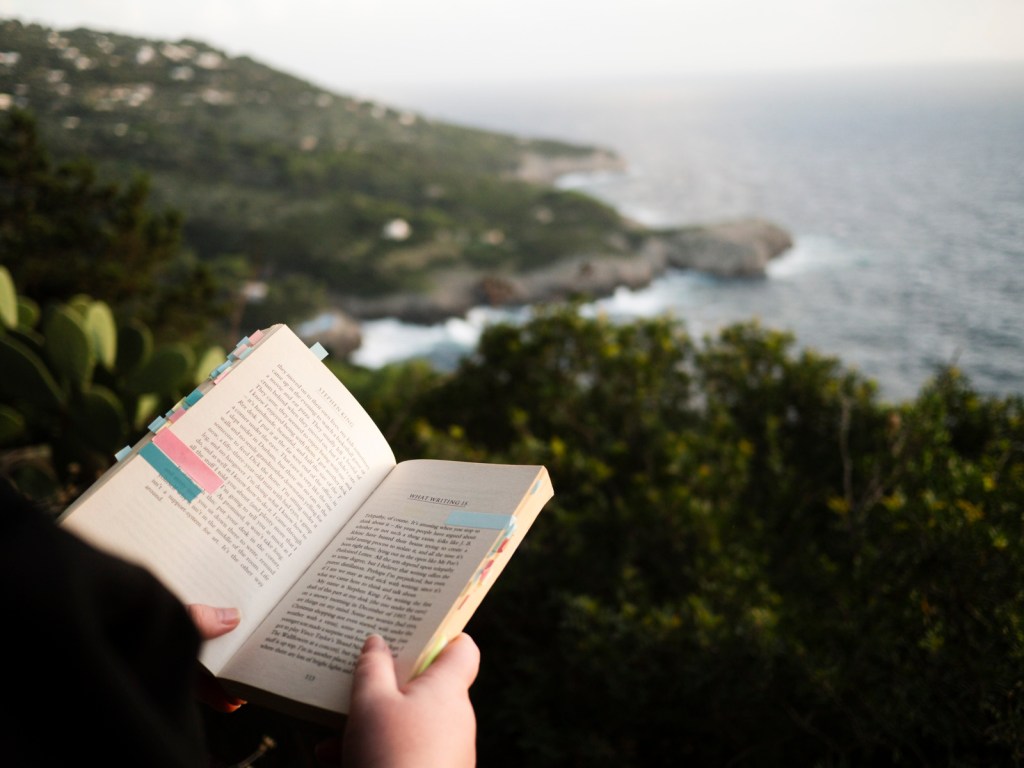
I kept reading the words slower and slower towards the end of the first section of the book, savoring what the author had to say. In a way, I didn’t want this story to end. But eventually, all our personal stories do, don’t they?
Thankfully the author is continuing his journey and his story. I can’t wait for another non-fiction piece to devour in the stupid hours of the night.
Lastly, I recommend “On Writing” by Stephen King to anyone looking to improve their writing skills and to learn some life lessons along the way. And I encourage you to read it, and not between the lines (which Stephen King advises us not to do in the beginning) but to read it and to read it deeply.
Only then do we extract the essence of this masterpiece of a book — word by word, a memory of the 21st century (part memoir, part great writing tips).
As honest, raw, and intricately complex, it is also the story of the making of a great writer. And the secret was simple — living life, having faith, and pursuing doing what you love. In my experience, that’s the cocktail that grants you a tenfold of blessings.
If writing is what you love doing, all the better. Keep at it. Keep writing.
I know I will, with Part 2 of my bookmarks on Stephen King’s “On Writing” somewhere on the horizon.

Discover more from Art + Copy
Subscribe to get the latest posts sent to your email.
 Art + Copy