There are one too many ‘copywriting’ experts out there today. Most will throw at you gift-wrapped mediocrity packaged as advice.
What happened to relying on the good old classics for advice and ways to grow?
Ogilvy, Sugarman, Sullivan, Lois, and many other masters of their time all shared lessons, their best-kept secrets of the trade, and their advice on copy that works. All that seems to be long forgotten by my contemporaries.
It’s possible I’ve been in the business too long. Most copy makes me yawn; the advice on writing out there is an abomination to any true professional.
I notice people trying to overwrite the past, pull out new tricks from their sleeves, and shed ‘light’ on BRAND NEW advice that is going to magically revolutionize your copy approach and get you those readers that will pull out their wallets and buy buy buy.
That’s not how it works.
Let me take you on a pleasant journey down memory lane, where the creative department along with copywriters crafted campaigns that turned heads, were cut out and kept for memories, and in today’s world would abide by high standards in contrast to the rambling we have today.
(A wise man once said the best copywriters are not necessarily the most skilled ones but the ones that have the highest standards).
The best definition of copywriting (me bringing back the 90s)
This isn’t a section to score on this article’s rankings. This is the who, what, and why of copywriting. Back to basics, if you will.
To quote Sugarman:
“Copywriting is a mental process the successful execution of which reflects the sum total of all our experiences, your specific knowledge and your ability to mentally process that information and transfer it onto a sheet of paper for the purpose of selling a product or service”.
Joseph Sugarman
I think this is a lovely way of phrasing it because it puts a very whole-rounded definition of also what is required and expected of this profession. I’ve come to the realization that this definition, too, has been rewritten.
If you Google it, you’ll even find definitions that start with ‘the process of writing words’, or ‘written text to get the reader to take action’. It’s fair to say that copywriting has morphed because of the digital transformation…
But it is also true that we’ve forgotten the essence of why it matters.
And I don’t like it.
COMPLAINT NUMBER 1:
We’ve forgotten that copywriting is a mental process that takes time, needs care, and deep thought.
That’s right. You don’t have to dash out copy tasks like you’re a machine. Although Sugarman covered a lot about direct mail advertising, and arguably the approach is different to the tasks you might have at hand, the same principles still apply.
Take a task, go think about it, and put your brainstorming session in writing. One idea is not enough, you really have to approach your copy tasks like it’s a whole process. It’s not dashing out line after line of whatever comes to mind. It’s about carefully thinking through everything you have to say.
Because every word matters.
That was the beauty of the good old days. There was a character count and a page limit in print. Every word meant $$$. Copywriters added weight to each word. Each sentence. Each paragraph.
Let’s bring that back, shall we?
COMPLAINT NUMBER 2:
We’ve forgotten to live a little and instead leverage general knowledge to complete copy tasks.
You know how all great ideas are born? Someone with ‘curiosity’ written in their DNA simply connects the dots. Let me explain.
Nature has it, that we as humans look for patterns. The more we know, the more flexible and versatile we are, the more dots we have to connect to find those patterns and form new ideas. You form original ideas based on your unique experiences, and your mind does that work for you when you sit down to solve a creative problem.
How I see things done is that many professionals use general knowledge they have about a subject to just write something, anything that will ‘remotely’ work. Let’s get rid of that in our practice, no?
Go out! Travel! Pick up new skills, learn a new language, and research new professions. Live a little. Experience life and connect those dots. That’s the true source of creativity, not your self-help books collecting dust on the shelves (although I’m guilty of this one).
COMPLAINT NUMBER 3:
Lack of thought. Careless mistakes and a broken flow in most copy.
When your approach to copy is a bit flawed, and you don’t follow up on the point above, you have nothing to process. If you don’t process information, how are you going to deliver anything great?
The greatest copywriters had it right. Step 1 – write a killer first sentence. The whole point of your copy is to get your reader to read the first one. And the point of the second sentence is to make them read the third. So on and on until you peak someone’s interest enough to pay attention to your message. Or your product. Or offer. Whatever.
What this has been replaced with today is short, choppy copy that tells me not everyone weighs their words as they should.
Don’t waste your words. Give each one meaning, tap into emotions, use power words, and address the reader directly. Get them to respond. Make. Those. Words. Count.
COMPLAINT NUMBER 4:
What happened to pen on paper?
I don’t mean literally, although that too.
I’m talking about the art of the first draft. Putting all your thoughts ‘on paper’ and then polishing it up as you edit. Here is what I see today – a whole lot of ‘I’ll try to make it perfect on the first draft and that shall be what I send out into the world’.
I think that many great copywriters used to practice writing, putting all their thoughts down on paper – anything and everything that came to mind. They would then refine their ideas in a second draft and come up with their pitch.
We need more of that.
And speaking of pen on paper. Step away from your computer sometimes, it’s good practice to learn to put your mind in freeform writing. I briefly cover it in an article where I urge you to run to the store to buy a sketchbook.
FINAL COMPLAINT:
Are you selling or taking up more space on cluttered Google?
People don’t buy into logos, they buy into people. If there’s a person behind the words, the personality has to shine through. If you don’t have a personality, what are you channeling in your copy?
No offense to anyone.
You’ll probably say BuT ThErE is tHe BrAnD PeRsoNaLitY. Are you going to adapt fictional attributes and channel fake characteristics? No! Today brands try to match similar attributes and a tone of voice that resonates with clients that are desperate for relatable brands.
Adapt to the brand personality, but channel real qualities. Speak from the heart, someone once said.
Alternatively, act like an owner and inject some of your own personality into the copy. Chances are, it’ll be appreciated.
The point I’m making is that in order to sell, you have to set up the perfect environment with your copy to do so. And that needs a little spark of personality (and creativity).
Instead, we prioritize search engine optimization, clutter copy with keywords, and hit publish on those articles more often than we should for the sake of our piece of the pie with traffic.
It’s time to change that.
Get inspired by great copy and ads from the past (the good old days of ‘art + copy’)
1. 1983

From The Copy Book, edited by Julius Wiedemann, published by Taschen, 2018, p. 018-019. © 2018 Taschen.
2. 1998

From The Copy Book, edited by Julius Wiedemann, published by Taschen, 2018, p. 040-041. © 2018 Taschen.
3. 1988

From The Copy Book, edited by Julius Wiedemann, published by Taschen, 2018, p. 103. © 2018 Taschen.
4. 1995

From The Copy Book, edited by Julius Wiedemann, published by Taschen, 2018, p. 172-173. © 2018 Taschen.
5. 1976
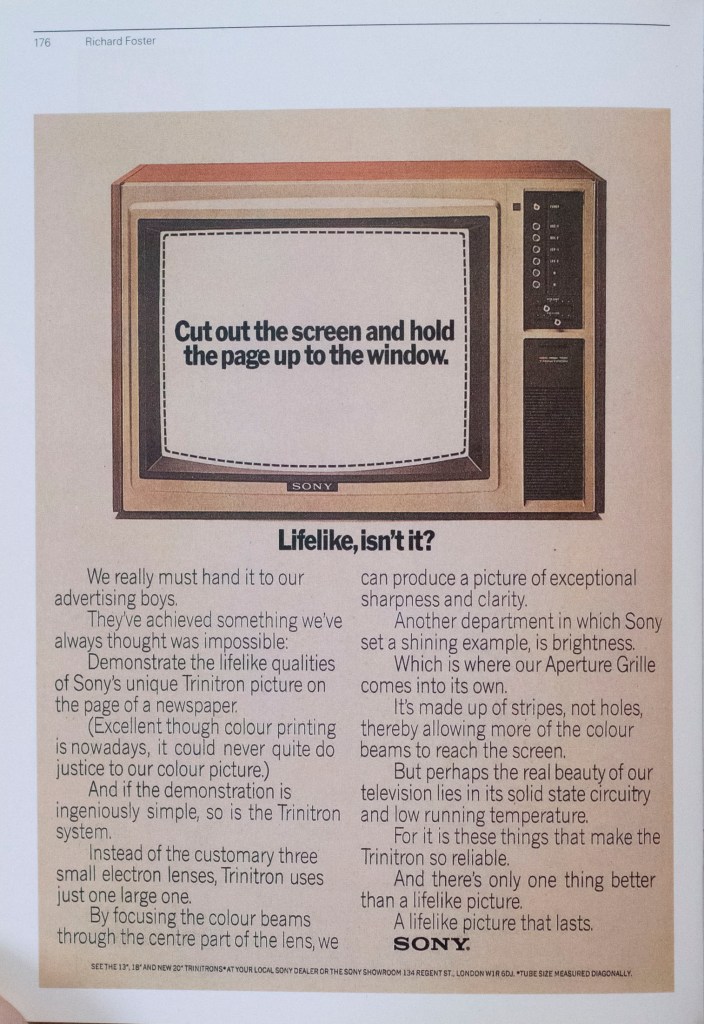
From The Copy Book, edited by Julius Wiedemann, published by Taschen, 2018, p. 176. © 2018 Taschen.
6. 2009
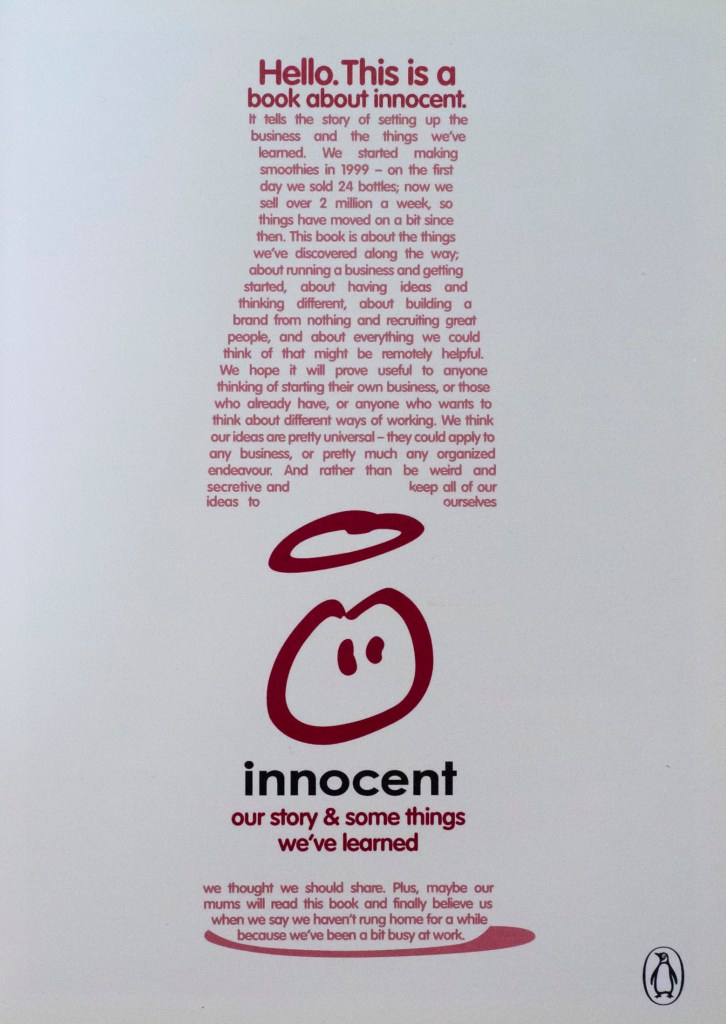
From The Copy Book, edited by Julius Wiedemann, published by Taschen, 2018, p. 195. © 2018 Taschen.
7. 1980

From The Copy Book, edited by Julius Wiedemann, published by Taschen, 2018, p. 340-341. © 2018 Taschen.
8. 1990

From The Copy Book, edited by Julius Wiedemann, published by Taschen, 2018, p. 341-342. © 2018 Taschen.
I also want to add a note about this particular book where I drew examples. The Copy Book is an incredible gem that I treasure above all my other copy-related books. Get it. Read it cover to cover if you aspire to excellence. I also highly recommend it for those wanting to get to the core of copywriting excellence, no matter which part of your career path you’re at.
There’s a beautiful quote that I want to share — an empowering stance from one of my favourite brands:
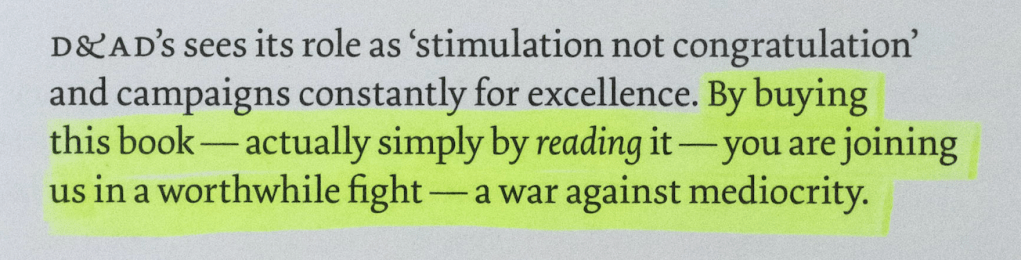
From The Copy Book, edited by Julius Wiedemann, published by Taschen, 2018, p. 007. © 2018 Taschen.
Hope you enjoyed reading this piece as much as I enjoyed writing it. Despite being a bit opinionated, I hope you too, find some truth in it.
Discover more from Art + Copy
Subscribe to get the latest posts sent to your email.
 Art + Copy